
Table of Contents
There’s no denying that preparing for a singing audition is both an exciting and stressful time. From your first time in front of judges to your 50th time in front of judges, the way you get ready for your audition can influence your success.
Auditions do not happen just because of natural talent; they also require proper preparation and being prepared means you are able to show confidence. In this guide, you will learn about every single step you should follow in order to enter your next singing audition feeling calm, prepared and ready to perform at your best.
Introduction: Make Your Voice Count
A singing audition is your chance to tell a story with your voice. It’s not just about hitting the right notes, it’s about connecting with your audience, showing confidence, and expressing your unique artistry. Whether you’re auditioning for a musical theatre role, a choir placement, or a recording opportunity, this guide will walk you through the whole process in a simple, professional way.
We’ll break this down into before, during, and after the audition so you know exactly what to focus on at each step. By the end, you’ll have a clear plan to prepare not just your voice, but your mind, body, and stage presence too.
Develop a Solid Foundation Before Your Audition
The way you prepare and train yourself prior to your audition day establishes the basis of your confidence in your ability to deliver a strong performance. You can consider your pre-audition preparation activities as a training environment in which you will develop focus, consistency in your efforts and ultimately the confidence to perform well on your audition day.
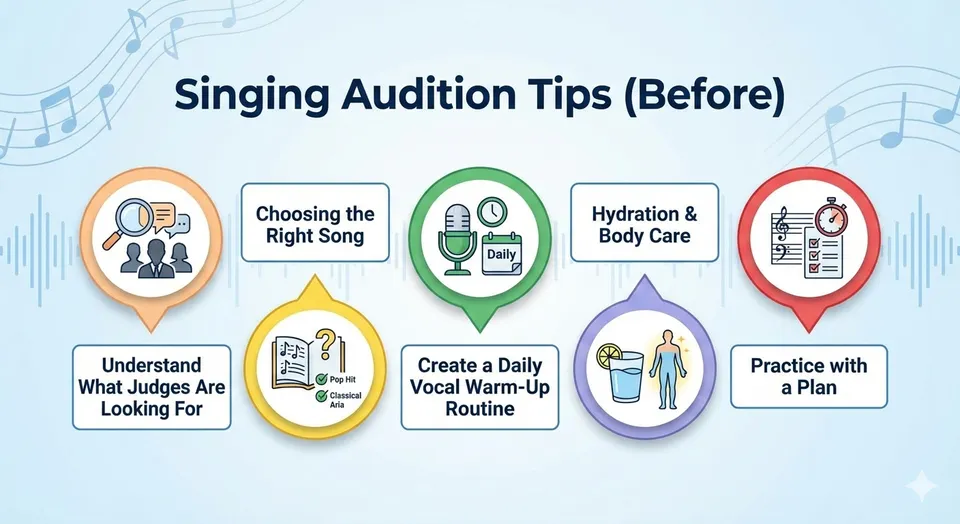
1. Understand What Judges Are Looking For
Judges look for more than just a pretty voice. They listen for:
- Pitch Accuracy - That's to say, do you sing on pitch and are you in command of your voice when singing?
- Tone Quality - Is your singing voice clear and expressive?
- Timing and Rhythm - Can you maintain timing when singing in front of an audience (or when auditioning) under duress?
- Stage Presence - Can you draw in an audience?
- Confidence and Professionalism - Do you look and act professional and capable?
2. Choosing the Right Song
Choosing the song to perform in your audition is one of the most important decisions to make. Choose something within your vocal range – It should feel comfortable, not forced.
- Pick a song that speaks to you emotionally – Judges can feel when a singer connects with their song.
- Avoid songs that are too difficult – Challenging songs can showcase skill, but only if you can sing them confidently.
- Have at least one backup song – You may be asked to sing something different on the spot.
Tip: when you practice, be sure to focus on practising the lower note and the section of the song that highlights your voice — typically the verse and the chorus.
Checkout some common mistakes while singing low notes and learn how to avoid them!

3. Create a Daily Vocal Warm-Up Routine
Your voice is an instrument just like any other instrument, and like any other instrument, you need to warm it up before use.
A good way to warm up your voice is to:
- Do some deep breathing exercises to prepare your body and calm your nerves.
- Use lip rolls and tongue rolls to loosen your cords, as well as build your vocal agility.
- Use scales and arpeggios as a building block for developing pitch accuracy, vocal control and the ability to maintain a steady sound throughout your vocal range.
You should create a daily habit of warming up your voice so you will have a prepared and responsive voice for your audition.
Explore some vocal exercises for beginners in the blog below!

4. Hydration & Body Care
Your voice mirrors your well-being. By taking care of your body and providing it with the correct inputs, you ensure that your voice is healthy:
- Drink room-temperature water all day long.
- Do not consume dairy products, sweetened items or extremely cold beverages before singing as they could create mucus or adversely affect your tone.
- Eat lighter meals the night before an audition and get adequate sleep.
5. Practice with a Plan
Practicing is not simply a matter of repetition; it is about developing your skills intelligently:
- Sing the song the way that you intend to perform it at your audition.
- Record yourself and listen to the recording of yourself to identify areas for growth.
- Practice singing in different locations so you do not become dependent on just one.
- Be aware of timing so that you are able to stay within the time frame for your audition.
- Put yourself in simulated audition situations to prepare for the audition and mitigate the nervousness associated with performing.
Here are 5 amazing tips for you to improve diction and pronunciation!

On the Day of the Audition: Walk In Ready
Your audition day is about presence as much as preparation. It’s time to show up focused and confident.
6. Arrive Early and Stay Calm
Use slow, deep breaths to center yourself. This helps calm stage fright and keeps your voice steady. Getting there early gives you:
- Time to settle in and relax.
- Space to do breathing or warm-up exercises right before your turn.
- A buffer in case of last-minute nerves.
7. Present Yourself Professionally
Introduce yourself clearly and politely, and always have your materials (sheet music, resume) organized and ready. From the moment you walk in:
- Stand tall and confident – great posture supports better breathing and voice.
- Dress comfortably and appropriately – look polished but choose clothes that let you breathe easily.
- Smile and be polite to judges and staff – first impressions matter.
8. Connect With the Judges and the Song
Let the judges see your connection to the music. They want to feel the story you’re telling. Nerves can make anyone freeze, but here’s the secret:
- Make eye contact and show that you care about the music.
- Express emotion through your body and face—don’t just stand still.
- Avoid distracting movements like pacing or tapping—keep it natural.
9. Hit Your Time Mark
Starting at the chorus or the most expressive section can help make the best impact. Most auditions have a set time limit. If you’re asked to sing 60–90 seconds:
- Choose the part of your song that shows your strengths.
- Time yourself during practice to make sure you stay within that window.
After the Audition: Grow From the Experience
The audition doesn’t truly end when you finish singing. What you do afterward shapes your next one.
10. Say Thank You
Always thank the judges for their time. Kindness leaves a lasting positive impression.
11. Ask for Feedback
If feedback is offered, listen carefully and take notes—even if it’s not what you wanted to hear. Constructive criticism helps you grow.
12. Reflect on Your Performance
Reflection builds insight, and insight builds stronger performances next time. Take a moment later to think about:
- What went well.
- What you can improve.
- How you felt during key moments.
Ready to Take Your Singing Auditions Seriously?
If you truly want to learn music the right way and improve your chances of getting selected in auditions, guided training makes all the difference. Spardha School of Music offers structured music education, experienced mentors, and performance-focused training that helps aspiring singers build strong fundamentals, confidence, and stage presence.
Whether you’re preparing for your first audition or aiming to refine your vocal skills for bigger opportunities, Spardha School of Music can support your journey and help you perform at your best when it matters most.
Frequently Asked Questions
1. How early should I start preparing for a singing audition?
Ideally, you should begin preparing at least 2–4 weeks before the audition. This gives you enough time to choose the right song, strengthen your vocals, work on expression, and practice performing with confidence rather than rushing at the last minute.
2. How do I choose the best song for a singing audition?
The best audition song is one that fits your vocal range, style, and personality. Choose a song you connect with emotionally and can sing confidently without strain. It’s always better to perform a simple song well than struggle with a difficult one.
3. What is the biggest mistake singers make during auditions?
One of the most common mistakes is overthinking and letting nerves take control. Singers often forget to connect with the song and focus too much on being perfect. Judges value confidence, expression, and authenticity just as much as technical skill.
4. Can professional training really improve my chances of getting selected?
Yes. Proper vocal training helps you build strong fundamentals, improve pitch control, understand performance techniques, and handle auditions with confidence. Structured guidance prepares you not just to sing well, but to perform in a way that stands out to judges.